The vicious cycle of domestic abuse – when apologies become a deadly trap
26 November 2026
An abusive partner does not necessarily strike every day.
Sometimes there are flowers, gifts, affection, apologies and promises that it will never happen again. But these moments of happiness can form part of a dangerous cycle of domestic abuse.
As the 16 Days of Activism for No Violence Against Women and Children commences, MISA, the Motor Industry Staff Association, urges South Africans to recognise the warning signs before it is too late.
More than a year has passed since gender-based violence and femicide (GBVF) was officially classified as a national disaster on 24 November 2025.
The Human Sciences Research Council’s first national GBV study revealed that approximately 7,8 million South African women had experienced physical and/or sexual violence in their lifetime, while almost 3,5 million women had experienced such violence at the hands of an intimate partner.
Martlé Keyter, MISA’s Chief Executive Officer: Operations, warns that repeatedly accepting apologies without meaningful behavioural change can have devastating consequences.
“An apology does not erase abuse. Flowers do not heal trauma and promises do not guarantee your safety. The danger is that victims may cling to the hope that the person they fell in love with will return, while the abuse becomes increasingly dangerous,” says Keyter.
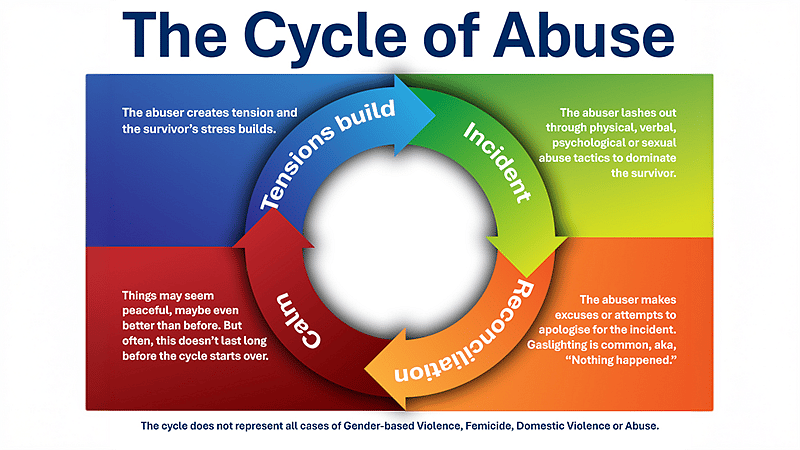
Psychologist Dr Lenore Walker developed the cycle of abuse theory in the 1970s. The commonly described four phases are:
- Tension building: The abuser becomes increasingly irritable, jealous, controlling or aggressive. Victims feel as though they are walking on eggshells, constantly adjusting their behaviour to avoid confrontation.
- Incident of abuse: The abuser resorts to physical, sexual, verbal, emotional, psychological or financial abuse, intimidation or threats.
- Reconciliation: The abuser apologises, promises to change, showers the victim with affection or gifts, or shifts responsibility for the abuse onto the victim.
- Calm: The relationship temporarily appears normal. Hope returns until tension starts building again.
Not every abusive relationship follows this pattern. Some victims experience relentless intimidation and controlling behaviour without periods of reconciliation. Over time, violence can escalate and the periods of calm become shorter or disappear altogether.
Financial dependency, unemployment, fear of retaliation, isolation and concern for children can make escaping extremely difficult. Leaving an abusive relationship can itself increase the risk of serious violence.
“Domestic abuse destroys self-esteem, causes lasting psychological trauma, exposes children to violence and can ultimately cost victims their lives.
“We must stop asking why victims remain in abusive relationships and start holding perpetrators accountable. Abuse is a choice made by the perpetrator, never the responsibility of the victim,” says Keyter.
MISA encourages victims to seek professional assistance and develop a safety plan with trusted individuals or support organisations.
Contact the Gender-Based Violence Command Centre on 0800 428 428 or SAPS on 10111 in an emergency.
“Love should never require you to live in fear. Your safety, dignity and life are worth protecting,” says Keyter.
Issued by Sonja Carstens, Manager of MISA’s Media & Communication Department, on behalf of the Union. For media enquiries contact Phakamile Hlubi-Majola, Spokesperson of MISA, on 083 367 6417 or [email protected]
#MISACARES #16DaysOfActivism #EndGBVF