When does love become an unhealthy obsession?
25 November 2026
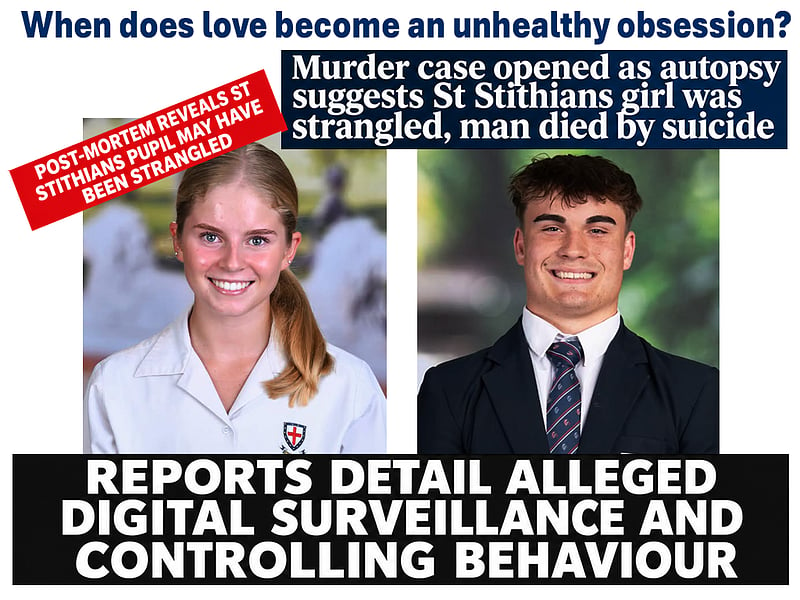
The tragic deaths of two teenagers, Cameron Waldeck-Cooks (17), a pupil at St Stithians Girls’ College in Randburg, and Ethan Coetzee (19), have raised serious questions about unhealthy behaviour, obsessive communication and the warning signs of potentially abusive teenage and even adult relationships.
According to reports, Ethan allegedly sent Cameron approximately 22 000 text messages in just 28 days. That is an average of 786 messages every single day, or almost 33 messages every hour, around the clock.
While the circumstances surrounding their deaths remain under police investigation, the reported volume of communication raises an important question: When does attention stop being affection and become a warning sign? MISA, the Motor Industry Staff Association, explore this question at the start of the annual 16 Days of Activism for No Violence Against Women and Children. The theme for 2026 is "Letsema: Men, Women, Boys and Girls working together to end Gender-Based Violence and Femicide (GBVF)".
Cameron had travelled to Sabie to participate in a hiking trip with Ethan and his family that would contribute towards her Gold level of the President’s Award for Youth Empowerment. They were found dead at a Sabie lodge on Monday, 3 August.
Mpumalanga police are investigating a murder case. Cameron’s parents, Derrick Cooks and Claire Waldeck-Cooks, said in a written statement that preliminary findings by an independent forensic pathologist indicated Cameron died from strangulation and suffocation. Police have indicated that Ethan may have died by suicide.
It is essential to emphasise that these are allegations and preliminary findings, not conclusions established by a court. Police are still investigating and Cameron’s family has urged the public not to treat speculation or unverified information as fact.
Research and guidance from organisations such as the World Health Organization (WHO), the US Centres for Disease Control and Prevention (CDC) and love is respect, identify several warning signs of unhealthy or potentially abusive relationships:
- 🚩 Excessive messaging: Constant texts, repeated calls and demands for immediate replies can become forms of digital harassment or control.
- 🚩 Possessiveness disguised as love: Statements such as "I cannot live without you" or "You belong to me" can signal emotional manipulation when used to create guilt, fear or dependency.
- 🚩 Monitoring and surveillance: Demanding passwords, checking phones, tracking locations or insisting on knowing someone's whereabouts at all times.
- 🚩 Extreme jealousy: Accusing a partner of cheating, questioning friendships or becoming angry when they spend time with others.
- 🚩 Isolation: Gradually separating a partner from friends, family and activities they previously enjoyed.
- 🚩 Threats and intimidation: Threatening self-harm, violence or retaliation if a partner wants to end the relationship.
- 🚩 Ignoring boundaries: Refusing to accept "no", demanding constant attention or continuing unwanted contact.
Excessive communication alone does not prove abuse. What matters is whether the communication is welcome, respects boundaries and allows both partners to maintain their independence.
During MISA's 16 Days of Activism awareness campaign, the Union urges parents, educators, teenagers and adults to recognise these warning signs before unhealthy relationships escalate.
“Healthy love is built on mutual respect, trust, independence and consent. It does not demand constant access, control or obedience. If a teenager feels frightened, trapped, monitored or unable to end a relationship safely, adults must take those concerns seriously and help them access appropriate support. Teach our children that jealousy is not proof of love, obsession is not romance and control is not care. Love should make you feel safe, not afraid,” says Martlé Keyter, MISA’s Chief Executive Officer: Operations.
Issued by Sonja Carstens, Manager of MISA’s Media & Communication Department, on behalf of the Union. For media enquiries contact Phakamile Hlubi-Majola, Spokesperson of MISA, on 083 367 6417 or [email protected]
#PROUDLYMISA #MISALEADS #MISACARES #MISAONTHEMOVE #MISAFAMILY